Blog

  • What Is a Balance Sheet and How Do Companies Use It?
    What Is a Balance Sheet and How Do Companies Use It?

    Before investors invest, banks approve loans, or business owners make important decisions, they need a clear picture of the company’s financial position. One of the most important documents that provides this information is the balance sheet.

    What Is a Balance Sheet?

    A balance sheet is a financial statement that shows what a company owns, what it owes, and how much belongs to its owners at a specific point in time. It provides a snapshot of a company’s financial health on a particular date. Businesses use balance sheets to understand their financial position, monitor resources, and make informed decisions. Investors, lenders, business owners, and analysts also use balance sheets to evaluate the strength and stability of a company.

    What Information Does a Balance Sheet Contain?

    A balance sheet is divided into three main sections:

    • Assets
    • Liabilities
    • Shareholders’ Equity  

    These three components work together to show the complete financial picture of a business.

    1. Assets – What the Company Owns

    Assets are resources owned by the business that have economic value. They help the company operate and generate future income. Common examples include Cash and bank balances ,Inventory or stock ,Machinery and equipment ,Buildings and land , Accounts receivable  , Investments and Computers and office equipment

    Assets are generally classified into two categories.

    Current Assets

    These are assets expected to be used, sold, or converted into cash within one year.Examples Cash ,Inventory ,Accounts receivable Short-term investments

    Non-Current Assets

    These are long-term assets used in the business for several years.Examples Property ,Machinery ,Vehicles ,Furniture ,Long-term investments

    2. Liabilities – What the Company Owes

    Liabilities represent the company’s financial obligations .In simple terms, these are the debts and commitments the business must pay.

    Examples include Supplier payments ,Salaries payable ,Taxes payable ,Bank loans ,Rent due Interest payments

    Liabilities are also divided into two categories

    Current Liabilities

    These obligations are due within one year.Examples -Short-term loans ,Utility bills ,Outstanding supplier payments ,Taxes payable

    Non-Current Liabilities

    These are long-term obligations that extend beyond one year.Examples -Long-term business loans ,Bonds payable  and Lease obligations

    3. Shareholders’ Equity – What Belongs to the Owners

    Shareholders’ equity represents the owners’ claim on the company’s assets after all liabilities have been paid.It includes Capital invested by owners  ,Retained earnings (profits kept in the business)  and Additional contributions made by shareholders  If the business sold all its assets and paid all its debts, shareholders’ equity is what would remain.

    The Balance Sheet Formula

    The entire balance sheet is built around one fundamental accounting equation .This equation must always balance. Assets = capital + liability

    For example –

    Assets = ₹50,00,000  Liabilities = ₹20,00,000  Shareholders’ Equity = ₹30,00,000

    ₹50,00,000 = ₹20,00,000 + ₹30,00,000

    This is why it’s called a balance sheet.

    Why Is a Balance Sheet Important?

    1. Shows Financial Health-A balance sheet helps determine whether a company is financially stable. It reveals whether the business has enough assets to meet its obligations.

    2. Helps Banks and Lenders Make Decisions –Before approving loans, lenders often review balance sheets. They want to understand whether the company can repay borrowed money.

    3. Supports Investor Decisions –Investors use balance sheets to assess -Financial strength ,Debt levels ,Growth potential ,Long-term sustainability

    4. Helps Business Owners Plan Better –Business owners can identify ,Areas needing improvement ,Cash shortages ,Excessive debt ,Opportunities for growth

    5. Tracks Business Progress –Comparing balance sheets over different periods helps businesses understand how their financial position is changing.

    How Do Companies Use Balance Sheets?

    Businesses rely on balance sheets for many purposes.

    Managing Cash and Resources –Companies monitor available resources and identify whether they have enough assets to support operations.

    Controlling Debt –Balance sheets help businesses avoid taking on excessive liabilities. Owners can monitor how much debt the company carries.

    Planning Expansion –Before opening new branches or investing in equipment, companies often review their balance sheets to assess affordability.

    Improving Financial Strategy –Businesses use balance sheet data to make informed decisions about Investments ,Borrowing ,Cost control ,Resource allocation

    Example

    Imagine a small bakery.

    Assets -Cash: ₹2,00,000  ,Baking Equipment: ₹5,00,000 Inventory: ₹1,00,000

    Total Assets = ₹8,00,000

    Liabilities – Supplier Payments: ₹1,50,000  ,Bank Loan: ₹2,50,000

    Total Liabilities = ₹4,00,000

    Owner’s Equity -₹4,00,000

    The equation become ₹8,00,000 = ₹4,00,000 + ₹4,00,000

    The balance sheet balances perfectly.

    Common Mistakes People Make When Reading Balance Sheets

    Looking Only at Total Assets –Having many assets doesn’t automatically mean a business is financially healthy. Debt levels matter too.

    Ignoring Liabilities –High liabilities can create financial pressure even if assets appear strong.

    Assuming Profit Equals Cash –A profitable company may still face cash shortages. The balance sheet provides a broader financial picture.

    Reviewing a Single Year in Isolation –Trends over multiple years often provide better insights than one snapshot.

    Interesting Facts About Balance Sheets

    • Balance sheets have been used in accounting for centuries to track business finances.
    • Every publicly listed company regularly publishes balance sheets as part of its financial reports.
    • Investors often compare balance sheets from different years to identify improvements or warning signs.
    • A company can be profitable yet financially stressed if its balance sheet shows weak liquidity.
    • Balance sheets play a major role in mergers, acquisitions, and investment decisions.

    Final Thoughts

    A balance sheet may seem intimidating at first, but its purpose is simple.It tells you What a company owns ,What it owes and What belongs to its owners.

    By bringing together assets, liabilities, and shareholders’ equity, it provides a clear snapshot of a company’s financial position at a specific point in time.Whether you’re running a business, evaluating an investment, or simply improving your financial knowledge, understanding balance sheets can help you make better and more informed decisions.Because in the world of business, it’s not just about how much money a company earns—it’s also about how strong its financial foundation truly is.

    FAQs

    What is a balance sheet in simple terms?

    A balance sheet is a financial statement that shows a company’s assets, liabilities, and owners’ equity at a specific date.

    Why is it called a balance sheet?

    It’s called a balance sheet because the accounting equation must always balance: Assets = Liabilities + Equity.

    Who uses balance sheets?

    Business owners, investors, lenders, analysts, and managers use balance sheets to evaluate financial health.

    Does a balance sheet show profit?

    Not directly. Profit is shown in the income statement, although retained earnings may appear within equity.

    Why are balance sheets important?

    They help assess financial stability, manage debt, support decision-making, and provide insight into a company’s overall financial position.

  • What Is EBITDA and Why Do Investors Pay Attention to It?

    What Is EBITDA and Why Do Investors Pay Attention to It?

    Imagine two companies operating in the same industry. Both sell similar products and generate almost the same revenue. But one company owns expensive machinery and has large loans, while the other leases its equipment and carries very little debt.

    If you only looked at their net profits, one company might appear much more successful than the other. However, those profits can be influenced by factors such as financing decisions, taxes, and accounting methods.

    Investors  use EBITDA to get a clearer picture of how a business is performing at its core. While it isn’t a perfect measure, it helps remove certain expenses that may not reflect the company’s day to day operational performance.

    What Is EBITDA?

    EBITDA stands for Earnings Before Interest, Taxes, Depreciation, and Amortization. It is a financial metric used to evaluate a company’s operating performance before considering Interest expenses, Taxes ,Depreciation and Amortization EBITDA focuses on how much money a business generates from its core operations. Investors, analysts, lenders, and business owners often use EBITDA to compare companies more fairly, especially within the same industry.

    What Does EBITDA Mean?

    Earnings -The profit generated by the business.

    Before Interest -Interest expenses on loans and borrowings are excluded.

    Before Taxes -Taxes vary across countries and business structures, so they are removed.

    Before Depreciation -Depreciation is the accounting expense related to the gradual reduction in the value of physical assets like machinery and vehicles because of its usage .

    Before Amortisation -Amortisation refers to the gradual allocation of the cost of intangible assets such as patents, trademarks, or software licenses.

    By excluding these items, EBITDA attempts to highlight operational performance.

    How Is EBITDA Calculated?

    For example

    Net Profit = 50 lakh   Interest = 10 lakh  Taxes = 15 lakh Depreciation = 8 lakh Amortisation = ₹2 lakh

    EBITDA = 85 lakh

    This suggests that the company’s operations generated ₹85 lakh before those additional expenses were considered.

    Why Do Investors Pay Attention to EBITDA?

    1. Helps Measure Core Business Performance –EBITDA focuses on operational earnings. It removes expenses that may differ because of financing choices or accounting methods. This helps investors understand how efficiently the business itself is performing.

    2. Makes Company Comparisons Easier –Two companies in the same industry may have Different tax obligations ,Different debt levels ,Different asset structures  and EBITDA allows investors to compare them on a more equal basis.

    3. Highlights Cash-Generating Potential -Since depreciation and amortisation are non-cash accounting expenses, EBITDA may provide insight into a company’s ability to generate operating cash. However, it’s important to remember that EBITDA is not the same as cash flow.

    4. Widely Used in Valuation -Investors and analysts often use EBITDA when valuing companies. Metrics such as the EV/EBITDA ratio help assess whether a business appears relatively expensive or inexpensive compared to peers.

    5. Useful for Lenders -Banks and lenders may review EBITDA to evaluate whether a company can potentially meet future debt obligations. Strong EBITDA can indicate healthier operational performance. EBITDA shows how the business performs operationally, while net profit shows what remains after all expenses.

    Advantages of EBITDA

    1. Simplifies Performance Analysis –It removes variables that can distort operational comparisons.

    2. Useful Across Industries –EBITDA is commonly used in sectors such as Manufacturing  ,Retail ,Technology ,Telecommunications ,Healthcare

    3. Helps Compare Similar Businesses –Investors can evaluate businesses with different capital structures more effectively.

    4. Focuses on Operations –It highlights whether the underlying business activities are generating earnings.

    Limitations of EBITDA

    EBITDA has important limitations.

    1. Ignores Debt Costs –Interest expenses are real financial obligations. Excluding them may make heavily indebted companies appear stronger than they actually are.

    2. Excludes Taxes –Taxes affect actual profitability and cash available to the business.

    3. Overlooks Capital Expenditures – Companies still need to spend money replacing equipment and maintaining operations. Depreciation may be non-cash, but the assets eventually require real investment.

    4. Is Not the Same as Cash Flow – EBITDA doesn’t account for -Working capital changes ,Capital expenditures ,Debt repayments Therefore, it should not be treated as a direct measure of available cash.

    A  Real Life Example

    Imagine two delivery companies.

    Company A

    Uses large bank loans to purchase vehicles. Owns all its delivery trucks.

    Company B

    Leases its vehicles. Has very little debt.

    Their net profits may differ significantly because of interest expenses and depreciation. However, EBITDA can help investors compare how efficiently both companies run their actual delivery operations.

    When Should Investors Use EBITDA?

    EBITDA can be particularly useful when Comparing companies within the same industry ,Evaluating operational efficiency ,Reviewing business valuations ,Assessing acquisition opportunities. Understanding earnings before financing and accounting differences.

    However, it should always be considered alongside other financial metrics.

    Metrics Investors Often Review Alongside EBITDA

    Experienced investors do not  rely only on  EBITDA alone.

    They also consider

    • Revenue
    • Net Profit
    • Cash Flow
    • Working Capital
    • Debt Levels
    • Profit Margins
    • Return on Equity  

    Interesting Facts About EBITDA

    • EBITDA became especially popular during the 1980s as investors looked for better ways to compare companies involved in leveraged buyouts.
    • Many publicly listed companies report EBITDA in their financial presentations, even though it isn’t always required under accounting standards.
    • Companies with strong EBITDA can still face financial difficulties if they carry excessive debt or weak cash flow.
    • Investors often debate how useful EBITDA truly is because it excludes several important expenses.
    • Warren Buffett has publicly criticized overreliance on EBITDA, arguing that depreciation represents a genuine economic cost.

    Final Thoughts

    EBITDA is one of the most widely used financial metrics in the business world because it helps highlight a company’s operational performance before the effects of interest, taxes, depreciation, and amortisation. It can simplify comparisons, support valuations, and provide insight into how efficiently a business operates.

    However, EBITDA is not a perfect measure. It doesn’t capture debt obligations, capital spending needs, or actual cash flow.

    Understanding EBITDA can help you read financial statements more confidently and better evaluate how businesses truly perform beneath the surface.

    FAQs

    What does EBITDA stand for?

    EBITDA stands for Earnings Before Interest, Taxes, Depreciation, and Amortisation.

    Why do investors use EBITDA?

    Investors use it to evaluate operational performance and compare companies more fairly.

    Is EBITDA the same as profit?

    No. EBITDA excludes several expenses that are included in net profit calculations.

    Is EBITDA the same as cash flow?

    No. EBITDA does not account for capital expenditures, working capital changes, or debt repayments.

    Is a higher EBITDA always better?

    Not necessarily. A high EBITDA should be analysed alongside debt, cash flow, and other financial metrics to understand the company’s overall financial health.

  • What Is Cash Flow and Why Does It Matter for a Business?

    What Is Cash Flow and Why Does It Matter for a Business?

    Imagine a business that sells products worth lakhs of rupees every month. On paper, it looks profitable and successful. But when it is time to pay employees, suppliers, rent, or electricity bills, the company struggles because there isn’t enough cash in the bank. It may sound surprising, but this is one of the biggest reasons businesses run into trouble.

    The problem isn’t always a lack of profit ,it’s often a lack of cash flow. No matter how good a company’s sales are, a business needs actual cash coming in and going out at the right time to survive. That’s why cash flow is often called the lifeblood of a business.

    What Is Cash Flow?

    Cash flow refers to the movement of money into and out of a business over a specific period. It shows how much cash a company receives and how much it spends.

    Cash coming in is called cash inflow , Cash going out is called cash outflow. Cash flow helps determine whether a business has enough money to meet its day-to-day financial obligations.

    Revenue tells you how much you sold. Profit tells you how much you earned. Cash flow tells you whether you actually have money available to run the business.

    How Does Cash Flow Work?.

    Cash Inflows

    This is money entering the business.

    Examples – Sales revenue received in cash ,Customer payments ,Loan proceeds ,Investment from owners or shareholders and Interest income

    Cash Outflows

    This is money leaving the business.

    Examples include -Employee salaries ,Rent payments ,Supplier payments ,Utility bills ,Loan repayments ,Tax payments and Equipment purchases

    The difference between inflows and outflows determines whether the business has positive or negative cash flow.

    Positive vs Negative Cash Flow

    Positive Cash Flow

    Positive cash flow occurs when more money comes into the business than goes out.

    For example:

    Cash received = ₹10,00,000  Cash paid = ₹7,00,000 Positive Cash Flow = ₹3,00,000

    This generally means the business has enough cash to operate comfortably.

    Negative Cash Flow

    Negative cash flow occurs when cash outflows exceed inflows.

    For example  -Cash received = ₹6,00,000 Cash paid = ₹8,00,000 Negative Cash Flow = ₹2,00,000

    This situation may indicate cash shortages and can become a problem if it continues for a long period.

    Why Is Cash Flow Important?

    1. Helps Businesses Pay Their Bills

    Businesses need cash to pay  -Salaries ,Rent ,Suppliers ,Utility expenses and Taxes Strong cash flow ensures these obligations are met on time.

    2. Keeps Daily Operations Running

    Even profitable businesses can struggle if cash isn’t available when needed. Healthy cash flow allows operations to continue smoothly.

    3. Supports Business Growth

    Expansion often requires cash for -Hiring employees ,Purchasing inventory ,Marketing campaigns ,Opening new locations ,Positive cash flow provides the flexibility to invest in growth opportunities.

    4. Reduces Dependence on Borrowing

    Businesses with strong cash flow rely less on loans or emergency funding to cover operating expenses.

    5. Helps Handle Unexpected Situations

    Equipment breakdowns, economic downturns, delayed customer payments, or emergencies can happen at any time. Good cash flow acts as a financial cushion during difficult periods.

    Types of Cash Flow

    Businesses usually classify cash flow into three categories.

    1. Operating Cash Flow –This refers to cash generated from the company’s core business activities.

    Examples –Cash received from customers ,Payments to suppliers ,Employee salaries .It indicates whether the business operations themselves generate sufficient cash.

    2. Investing Cash Flow –This involves cash used for investments and long-term assets.

    Examples –Buying machinery ,Purchasing property ,Selling equipment ,Investment transactions .Investing cash flow often reflects future growth plans.

    3. Financing Cash Flow –This relates to funding activities.

    Examples-Taking loans ,Repaying debt ,Issuing shares and Paying dividends It shows how the business raises and manages capital.

    Example

    Imagine a furniture business sells products worth 5 lakh. The sales are made on credit, and customers promise to pay after 60 days.

    • Revenue = 5 lakh
    • Profit may look healthy.

    However, the business still needs immediate cash to pay Employees ,Suppliers and Rent If customers haven’t paid yet, the business could face cash flow problems despite being profitable.This is why cash flow matters so much.

    Common Causes of Cash Flow Problems

    Delayed Customer Payments –Businesses often struggle when customers take too long to pay invoices.

    Excess Inventory –Too much unsold stock ties up valuable cash.

    Rapid Expansion –Growing too quickly can increase expenses faster than incoming cash.

    Poor Financial Planning –Inadequate budgeting and forecasting can create cash shortages.

    High Debt Obligations –Large loan repayments can put pressure on available cash.

    How Businesses Improve Cash Flow?

    Collect Payments Faster –Encourage customers to pay invoices promptly.

    Manage Inventory Efficiently –Avoid keeping excessive stock levels.

    Control Operating Expenses –Monitor spending and reduce unnecessary costs.

    Negotiate Better Payment Terms –Longer payment periods with suppliers can improve liquidity.

    Maintain Emergency Reserves –Keeping cash reserves helps businesses navigate unexpected situations.

    Interesting Facts About Cash Flow

    • Many businesses fail not because they lack customers, but because they run out of cash.
    • Positive cash flow is often considered a stronger indicator of financial health than revenue alone.
    • Fast-growing businesses can experience cash flow shortages even while increasing sales.
    • Investors frequently analyze cash flow statements to understand the true financial strength of a company.
    • The phrase Cash is king is widely used in business because access to cash is essential for survival.

    Final Thoughts

    Cash flow is one of the most important measures of a business’s financial health. It tracks the money flowing into and out of the business and determines whether a company can meet its daily obligations, invest in growth, and survive unexpected challenges.

    While revenue shows sales and profit measures earnings, cash flow answers a more practical question:

    Does the business actually have enough cash to keep running?

    Because in business, profitability is important but without healthy cash flow, even successful companies can struggle. That’s why understanding cash flow isn’t just for accountants or investors. It’s essential knowledge for anyone who wants to understand how businesses truly work.

    FAQs

    What is cash flow in simple terms?

    Cash flow is the movement of money into and out of a business.

    Why is cash flow important?

    It helps businesses pay expenses, manage operations, and maintain financial stability.

    Can a profitable business have cash flow problems?

    Yes. Businesses can report profits but still face cash shortages if payments are delayed or expenses exceed available cash.

    What is positive cash flow?

    Positive cash flow means more cash is coming into the business than going out.

    What are the three types of cash flow?

    Operating cash flow, investing cash flow, and financing cash flow.

  • What Is Gross Profit vs Net Profit and Why Should Every Business Owner Understand the Difference?

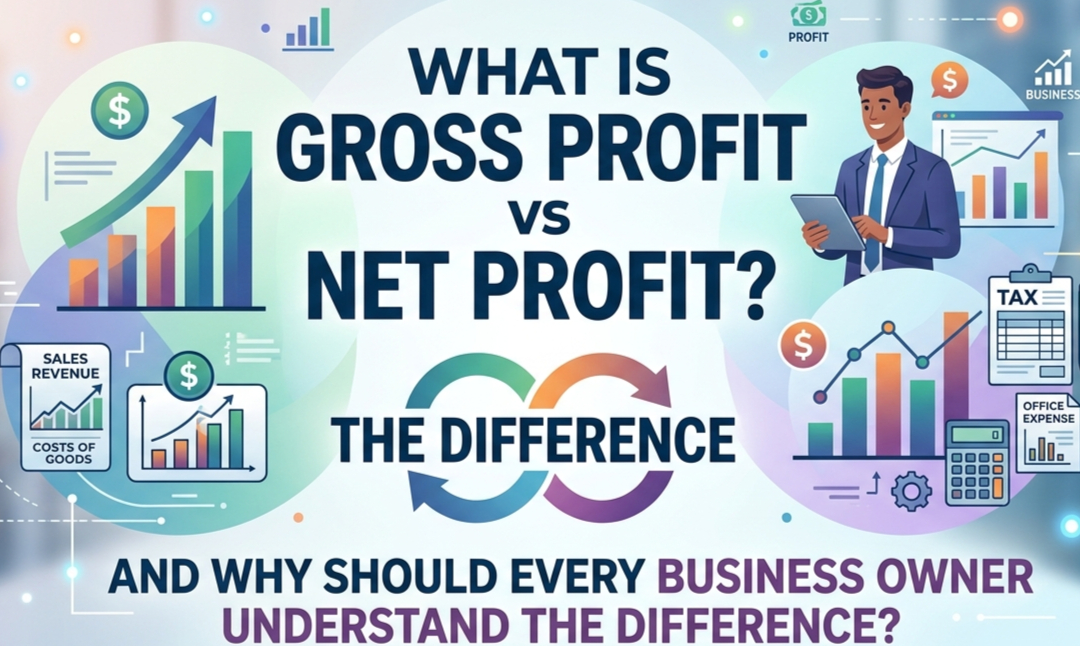
    What Is Gross Profit vs Net Profit and Why Should Every Business Owner Understand the Difference?

    Imagine you own a small bakery. At the end of the month, you look at your sales and realize you’ve earned 10 lakh. Naturally, you might think, That’s great, I’ve made 10 lakh in profit.

    But not so fast. Before you know how much money you’ve earned, you need to subtract the cost of ingredients, employee salaries, rent, electricity bills, taxes, and several other expenses. Only then can you understand how profitable your business truly is.

    This is where two important financial terms come into the picture-Gross Profit and Net Profit.

    What Is Gross Profit?

    Gross profit is the amount of money a business earns after subtracting the direct costs associated with producing or delivering its products and services. It shows how efficiently a business is creating and selling what it offers. Gross profit focuses only on production-related expenses and does not include administrative or operating costs. It is often one of the first indicators of whether a company’s core business activities are financially healthy.

    What Is Cost of Goods Sold (COGS)?

    COGS refers to the direct costs involved in producing goods or delivering services.

    Examples  -Raw materials ,Manufacturing costs ,Direct labour involved in production ,Packaging costs and Factory expenses directly linked to production COGS does not include expenses such as office rent, marketing, or taxes.

    Gross Profit Example

    Imagine a bakery generates -Revenue  =5,00,000 ,Flour, sugar, butter, and ingredients =1,20,000 ,Bakers’ wages =80,000

    COGS = 2,00,000

    Gross Profit =5,00,000 − ₹2,00,000 =  3,00,000

    This means the bakery earned ₹3,00,000 after covering the direct costs of making its products.

    What Is Net Profit?

    Net profit is the amount of money left after subtracting all business expenses from revenue. It represents the company’s actual earnings. Net profit is often called the bottom line because it appears near the bottom of the income statement. It shows whether the business is truly profitable after accounting for every cost involved in running it.

    Total expenses include –

    Cost of Goods Sold (COGS)  ,Employee salaries ,Office rent ,Marketing expenses ,Utility bills ,Loan interest ,Insurance ,Taxes and Administrative costs

    Net Profit Example

    Revenue =5,00,000 ,Direct Costs (COGS) =2,00,000

    Other Expenses -Shop rent =40,000 ,Electricity =15,000  ,Marketing =20,000 ,Loan interest =10,000,Taxes =15,000

    Total Expenses = 3,00,000

    Net Profit -5,00,000 − 3,00,000 = 2,00,000

    While gross profit was 3,00,000, the bakery’s actual earnings were 2,00,000.

    Gross Profit vs Net Profit -The Key Difference

    The easiest way to understand it is this .Gross profit tells you how profitable your products are. Net profit tells you how profitable your entire business is.

    Here’s a quick comparison

    Feature      Gross Profit       Net Profit
    MeaningRevenue after direct costsRevenue after all expenses
    Includes COGS?      Yes                          Yes
    Includes Rent?      No                          Yes
    Includes Salaries?      Only direct labour                          Yes
    Includes Taxes?      No                              Yes
    Focus Product efficiency  Overall profitability
    Also Called  Gross EarningsBottom Line

    Why Is Gross Profit Important?

    1. Measures Product Profitability –Gross profit helps businesses understand whether their products or services are generating enough money after production costs.

    2. Supports Pricing Decisions –If gross profit is too low, businesses may need to review pricing strategies.

    3. Helps Control Production Costs –Rising material costs or inefficient production processes can reduce gross profit.

    4. Indicates Operational Efficiency –Healthy gross profit often suggests that the business is managing direct costs effectively.

    Why Is Net Profit Important?

    1. Shows Actual Business Performance –Net profit reveals how much money the company truly earns.

    2. Supports Growth Plans –Businesses often use net profits to -Expand operations ,Invest in equipment ,Hire employees ,Launch new products

    3. Helps Attract Investors –Investors closely examine net profit when assessing financial health.

    4. Determines Financial Sustainability –A company consistently generating net profit is generally better positioned for long-term success.

    Can a Business Have High Gross Profit but Low Net Profit?

    Yes, Imagine a clothing store has Strong sales Low production costs. This results in a high gross profit.

    However, if it spends heavily on Expensive rent ,Advertising campaigns ,Administrative salaries and Loan repayments Its net profit may shrink significantly. This means the products are profitable, but overall expenses are eating into earnings.

    Can Gross Profit Be Low While Net Profit Improves?

    It can happen. For example -A business reduces office expenses. Renegotiates supplier contracts. Cuts unnecessary spending. Even if gross profit remains stable, better expense management can improve net profit.

    Common Mistakes Business Owners Make

    Focusing Only on Sales –High sales don’t always mean high profits. Expenses matter just as much.

    Ignoring Operating Costs -Businesses often underestimate how quickly indirect expenses add up.

    Confusing Gross Profit with Actual Earnings –Gross profit is not the money owners can freely spend. Net profit provides a clearer picture of true earnings.

    Not Monitoring Profit Regularly –Reviewing profits consistently helps identify problems early.

    How Business Owners Can Improve Both Profits

    Improve Gross Profit By –Negotiating better supplier prices ,Reducing production waste ,Improving efficiency ,Reviewing pricing strategies

    Improve Net Profit By –Controlling operating expenses ,Reducing unnecessary spending ,Managing debt carefully ,Improving productivity Optimising tax planning within legal limits

    Interesting Facts About Gross Profit and Net Profit

    • Two businesses with the same revenue can have very different profits depending on how they manage costs.
    • Gross profit margins often vary widely across industries. Retail businesses typically operate differently from software companies.
    • Investors frequently analyze both gross and net profit margins to evaluate efficiency.
    • Some fast-growing businesses generate healthy gross profits but struggle with net profitability due to aggressive expansion spending.
    • Understanding profits is one of the most important financial skills every entrepreneur can develop.

    Final Thoughts

    Gross profit and net profit may sound similar, but they answer two very different questions.

    Gross profit asks: Are our products or services making money?

    Net profit asks: Is our business actually making money after all expenses?

    Both numbers matter. Gross profit helps businesses understand production efficiency and pricing, while net profit reveals the true financial health of the company. The most successful business owners don’t just focus on increasing sales—they pay close attention to both gross and net profit because they know that earning revenue is only part of the story.

    After all, it’s not just about how much money comes in.It’s about how much you get to keep.

    FAQs

    What is gross profit in simple terms?

    Gross profit is the money left after subtracting the direct costs of producing goods or services from revenue.

    What is net profit?

    Net profit is the amount remaining after deducting all business expenses from revenue.

    Which is more important: gross profit or net profit?

    Both are important. Gross profit measures product efficiency, while net profit reflects overall business success.

    Can a company have high gross profit and low net profit?

    Yes. High operating expenses can significantly reduce net profit.

    Why should business owners track both?

    Monitoring both helps identify pricing issues, control costs, improve decision making, and understand the true profitability of the business.

  • What Is a Break-Even Point and Why Is It Important for Every Business?

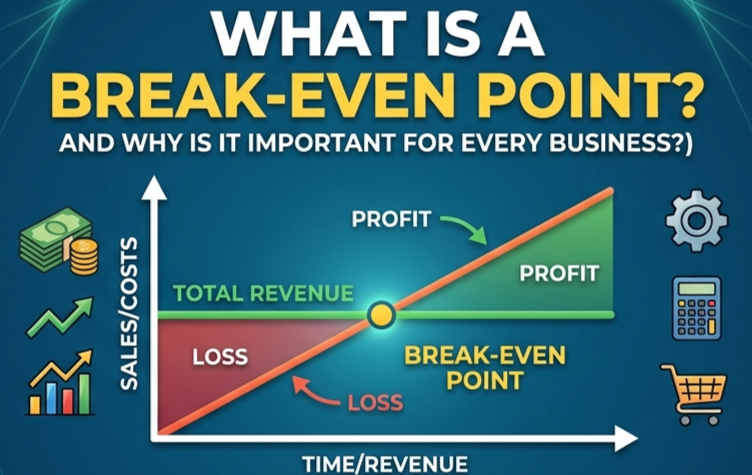
    What Is a Break-Even Point and Why Is It Important for Every Business?

    Imagine you’ve just opened a small cafe. You’ve invested money in renting the space, buying coffee machines, hiring staff, and stocking up on ingredients. Customers start walking in, and sales begin to pick up.

    At what point does your business stop recovering costs and actually start making a profit? That’s exactly what the break-even point helps you understand.

    Whether you’re running a startup, a small business, or planning to launch a new product, knowing your break-even point can help you make smarter financial decisions. It tells you the minimum amount you need to sell to cover all your costs no profit, no loss.

    What Is a Break-Even Point?

    The break-even point is the stage at which a business’s total revenue equals its total costs. At this point, the business is not making a profit, but it is not incurring a loss either. In simple words, it is the point where the business has recovered all of its expenses. Any sales made after reaching the break-even point contribute to profit.

    Break-even is the moment your business moves from recovering costs to earning profits.

    Understanding the Key Terms

    Fixed Costs

    Fixed costs are expenses that remain the same regardless of how much you sell.

    Examples include Rent ,Salaries of permanent staff ,Insurance ,Loan repayments ,Software subscriptions and Property taxes Whether you sell one product or one thousand products, these costs usually stay constant.

    Variable Costs

    Variable costs change depending on production or sales volume.

    Examples include –Raw materials ,Packaging ,Delivery charges ,Sales commissions and Production labour tied directly to output .The more you produce or sell, the higher these costs become.

    Selling Price Per Unit

    This is the amount charged to customers for each product or service sold.

    For example – If you sell a cake for 500, your selling price per unit is 500.

    A Simple Break-Even Example

    Imagine you own a bakery.

    Fixed Costs -Monthly rent: 30,000 ,Staff salaries: 20,000 Total Fixed Costs = 50,000

    Per Cake -Selling Price = 500 Variable Cost = 300

    Contribution per cake  =500 − 300 = 200

    Break-Even Point  = 50,000 ÷ 200 = 250 cakes

    This means ,You must sell 250 cakes in a month to cover all your costs.The 251st cake is where profit begins.

    Why Is the Break-Even Point Important?

    1. Helps Determine Profitability –The break-even point shows exactly how much a business needs to sell before earning profits. It gives owners realistic financial expectations.

    2. Supports Better Pricing Decisions -If the break-even point seems too high, businesses may reconsider pricing strategies. Adjusting prices can improve profitability.

    3. Helps Control Costs –Understanding how fixed and variable costs affect break-even encourages businesses to manage expenses more efficiently.

    4. Reduces Financial Risk –Knowing the minimum sales target helps businesses prepare for slower periods and avoid surprises.

    5. Assists in Business Planning – Entrepreneurs often use break-even analysis before launching New products ,New branches ,Startups and Expansion plans

    Benefits of Knowing Your Break Even Point

    Better Goal Setting -Businesses can establish clear sales targets.

    Improved Decision-Making -Owners can evaluate whether a product or project is financially viable.

    Greater Confidence –Understanding the numbers reduces uncertainty and supports informed decisions.

    Stronger Budgeting -Break-even analysis helps create more realistic financial plans.

    How Businesses Use Break-Even Analysis

    Companies regularly use break-even analysis to answer questions like –

    • How many units do we need to sell this month?
    • Should we increase prices?
    • Can we afford to hire more employees?
    • Is launching this product worth the investment?
    • How will rising costs affect profitability?

    What Happens After the Break-Even Point?

    Once the break-even point is reached –

    • Fixed costs have been covered.
    • Variable costs continue with each sale.
    • Additional revenue begins contributing to profit.

    For example

    If your break-even point is 250 cakes

    Selling 250 cakes = No profit, no loss.

    Selling 300 cakes = Profit on the additional 50 cakes.

    This is why many businesses closely track their sales against break-even targets.

    Factors That Affect the Break-Even Point

    Changes in Fixed Costs -Higher rent, salaries, or insurance increase the break-even point.

    Changes in Variable Costs -Rising raw material costs mean more sales may be needed to break even.

    Changes in Selling Price  -Increasing prices can lower the break-even point. Reducing prices may require higher sales volumes.

    Sales Volume –The speed at which products sell directly affects how quickly a business reaches break-even.

    Common Mistakes Businesses Make

    Ignoring Fixed Costs -Businesses sometimes underestimate expenses that occur regardless of sales.

    Setting Prices Too Low -Low pricing may attract customers but make profitability difficult.

    Forgetting Variable Costs -Every sale often comes with additional costs that must be considered.

    Treating Break-Even as the Final Goal -Breaking even is an important milestone, but long-term success requires consistent profitability.

    Interesting Facts About Break-Even Points

    • Many startups calculate their break-even point before officially launching.
    • Investors often review break-even analysis when evaluating business plans.
    • Seasonal businesses may have different break-even points throughout the year.
    • A lower break-even point generally provides greater flexibility during economic downturns.
    • Understanding break-even can help businesses avoid expanding too quickly.

    Final Thoughts

    The break-even point is one of the most practical financial concepts every business owner should understand. It tells you exactly how much you need to sell to recover your costs and begin generating profits.

    By understanding fixed costs, variable costs, and pricing, businesses can set realistic goals, reduce financial risks, and make more informed decisions.

    Because before a business can dream about big profits and expansion, it first needs to answer one simple question How much do we need to sell just to stay afloat?

    The break-even point provides that answer and that’s why it remains one of the most valuable tools in business planning.

    FAQs

    What is a break-even point in simple terms?

    It is the point where a business’s total revenue equals its total costs, resulting in no profit and no loss.

    Why is the break-even point important?

    It helps businesses understand how much they need to sell before earning profits.

    What costs are included in break-even analysis?

    Both fixed costs and variable costs are considered.

    Can the break-even point change?

    Yes. Changes in costs, pricing, or production levels can affect it.

    Does reaching the break-even point mean the business is profitable?

    No. It simply means all costs have been covered. Profit begins only after sales exceed the break-even point.

  • What Is Depreciation and Why Is It Important in Business Accounting?

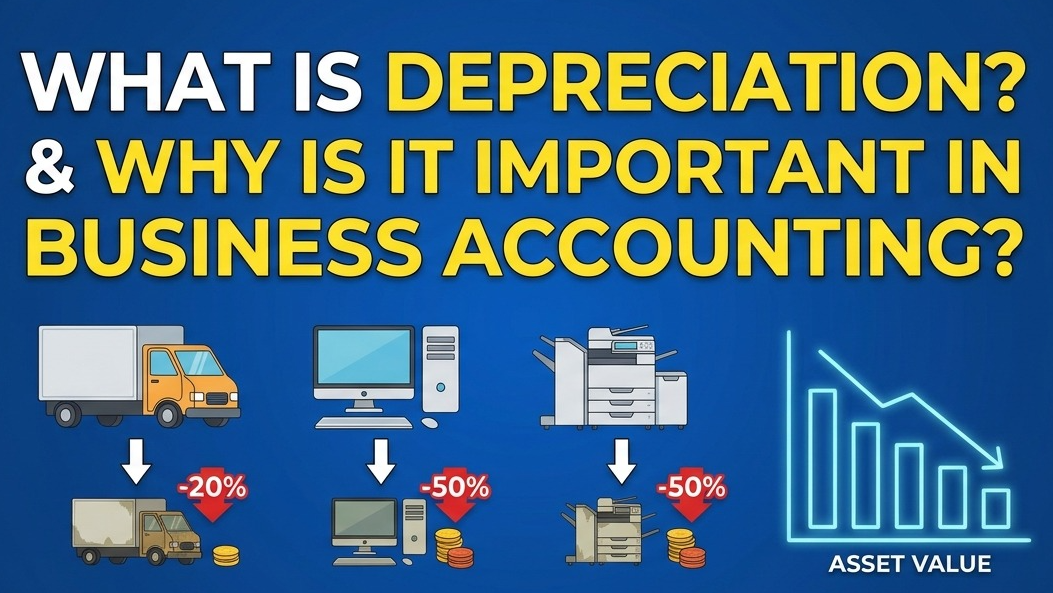
    What Is Depreciation and Why Is It Important in Business Accounting?

    Imagine you buy a delivery van for your business today. It looks brand new, runs perfectly, and helps you deliver products to customers. But after a few years of regular use, the van starts showing signs of wear and tear. Its market value falls, maintenance costs increase, and eventually, it isn’t worth as much as it was on the day you bought it.

    The same thing happens with many business assets machines, computers, office furniture, and equipment gradually lose value over time.In accounting, this decrease in value is known as depreciation.

    What Is Depreciation?

    Depreciation is the accounting method used to allocate the cost of a tangible asset over its useful life. It reflects the gradual reduction in the value of an asset due to factors such as Wear and tear, Regular usage ,Aging and Technological obsolescence Instead of treating the full purchase cost as an immediate expense, businesses recognise the cost over several years. Depreciation helps match an asset’s expense with the revenue it helps generate.

    Depreciation means spreading the cost of a long-term business asset over the period it is expected to be used.

    Why Do Assets Depreciate?

    Most business assets don’t last forever.

    They lose value because of several reasons:

    1. Wear and Tear –Machines, vehicles, and equipment naturally deteriorate with regular use.

    2. Aging -Even if an asset isn’t heavily used, time itself can reduce its value.

    3. Technological Changes-Computers, software, and electronic equipment can become outdated as newer technologies emerge.

    4. Reduced Efficiency –Older assets may become less productive or require higher maintenance costs.

    Which Assets Can Be Depreciated?

    Businesses generally depreciate tangible fixed assets that have a useful life of more than one year.

    Examples include -Machinery ,Factory equipment ,Delivery vehicles ,Office furniture ,Computers and laptops  ,Buildings (excluding land) andManufacturing tools

    Which Assets Are Not Depreciated?

    Some assets are usually not depreciated.

    Examples include -Land ,Inventory ,Cash and bank balances and Investments held for short-term trading

    These assets either don’t lose value in the same way or are treated differently under accounting rules.

    How Is Depreciation Calculated?

    There are several methods, but the most common is the Straight-Line Method.

    The formula is

    Asset Cost -The original purchase price of the asset.

    Residual Value -The estimated value of the asset at the end of its useful life. It is also called the salvage value.

    Useful Life -The period over which the business expects to use the asset.

    Example

    Imagine a company buys a machine for:

    Purchase Price: 5,00,000

    Residual Value: 50,000

    Useful Life: 5 years

    Using the straight-line method:

    Annual Depreciation:

    (5,00,000 − 50,000) ÷ 5  = 90,000 per year

    This means the business records ₹90,000 as depreciation expense every year for five years.

    Why Is Depreciation Important?

    1. Provides a More Accurate Profit Figure –If a business records the full cost of an expensive asset immediately, profits may appear unusually low in that year. Depreciation spreads the expense over time, giving a fairer view of earnings.

    2. Matches Expenses with Revenue –Assets help generate revenue for several years. Depreciation ensures that the related expense is recognized over the same period.

    3. Helps in Financial Reporting –Depreciation is an essential part of preparing accurate financial statements. Investors and lenders rely on these reports to assess business performance.

    4. Supports Tax Planning –In many jurisdictions, depreciation expenses can reduce taxable income according to applicable tax laws. This may lower the tax burden for businesses.

    5. Assists in Asset Replacement Planning –Tracking depreciation reminds businesses that assets eventually need replacement. It encourages better long-term financial planning.

    Common Methods of Depreciation

    Straight-Line Method –The same amount of depreciation is charged every year. It is simple and widely used.

    Declining Balance Method –Higher depreciation is recorded in the early years of the asset’s life. The expense gradually decreases over time.

    Units of Production Method –Depreciation depends on how much the asset is actually used. Suitable for machinery with measurable output.

    Depreciation vs Maintenance: What’s the Difference?

    Many people confuse these two concepts.

    Depreciation                                                        Maintenance
    Reduction in asset value over timeCost of keeping the asset operational
    Accounting expenseActual operating expense
    Non-cash expenseCash expense
    Reflects aging and usageCovers repairs and servicing

    For example -Depreciation records the gradual loss in value of a delivery truck. Maintenance covers oil changes, repairs, and servicing costs.

    Common Misconceptions About Depreciation

    Depreciation Means Money Leaves the Business –Not exactly. Depreciation is a non-cash expense. The cash was spent when the asset was purchased.

    Every Asset Depreciates –Assets like land are generally not depreciated because they don’t usually have a limited useful life.

    Depreciation Reduces Cash Flow –Depreciation reduces accounting profits but does not involve a current cash outflow.

    Small Businesses Don’t Need to Track Depreciation –Even small businesses benefit from understanding asset costs and planning for replacements.

    Interesting Facts About Depreciation

    • Depreciation has been a part of accounting practices for more than a century.
    • Two companies with identical profits can report different earnings because they use different depreciation methods.
    • Depreciation affects both the income statement and the balance sheet.
    • It is one of the reasons why accounting profit and cash flow are not always the same.
    • Investors often examine depreciation expenses to understand how asset-intensive a business is.

    Final Thoughts

    Depreciation may sound like a technical accounting term, but the idea behind it is simple.

    Businesses use assets for many years, and those assets gradually lose value over time. Instead of recording the entire cost at once, depreciation spreads that cost across the asset’s useful life.

    This approach helps businesses present more accurate financial statements, measure profits fairly, plan for future asset replacements, and comply with accounting requirements.

    Because in business, buying an asset isn’t just a one-time event—it’s a resource that contributes to operations over many years.

    And depreciation helps tell that story accurately.

    FAQs

    What is depreciation in simple terms?

    Depreciation is the process of spreading the cost of a tangible asset over its useful life.

    Why is depreciation important?

    It provides a more accurate picture of profits and helps businesses match expenses with revenue.

    Is depreciation a cash expense?

    No. It is a non-cash accounting expense.

    Which assets can be depreciated?

    Tangible assets such as machinery, vehicles, furniture, and computers can generally be depreciated.

    Is land depreciated?

    No. Land is generally not depreciated because it usually does not have a limited useful life.

  • What Is a Trial Balance and Why Is It Important in Accounting?

    What Is a Trial Balance and Why Is It Important in Accounting?

    Every day, companies record hundreds or even thousands of financial transactions—sales, purchases, salaries, rent payments, loans, and more. With so many entries being made, there’s always a chance that an error could occur.This is where a trial balance comes into the picture.

    A trial balance acts as an accounting checkpoint. It helps businesses verify that their bookkeeping records are mathematically accurate before preparing important financial statements.While it doesn’t catch every possible accounting mistake, it is one of the most important tools accountants use to ensure the books are in order.

    What Is a Trial Balance?

    A trial balance is a financial report that lists all the ledger account balances of a business at a specific point in time. It shows the total balances of all debit accounts and credit accounts. The primary purpose of a trial balance is to check whether total debits equal total credits.

    If both sides match, it suggests that the accounting entries have been recorded correctly according to the double-entry bookkeeping system. A trial balance is a summary of all account balances used to check the accuracy of accounting records.

    What Is the Double-Entry System?

    To understand a trial balance, you first need to understand a basic accounting rule.

    Every financial transaction affects at least two accounts: One account is debited. Another account is credited.

    For example:

    If a business purchases furniture worth 50,000 using cash

    Furniture Account  Debit 50,000

    Cash Account Credit 50,000

    Because every transaction has equal debit and credit entries, the total debits and credits should always balance. The trial balance helps confirm this.

    What Does a Trial Balance Contain?

    A trial balance generally includes -Account names ,Debit balances and Credit balances

    Examples of accounts listed are Cash ,Bank Account ,Sales ,Purchases ,Rent Expense ,Salaries Expense ,Inventory ,Loan Accounts ,Capital Account ,Accounts Receivable and Accounts Payable Each account appears with either a debit balance or a credit balance.

    Why Is a Trial Balance Important?

    1. Helps Detect Accounting Errors –The biggest purpose of a trial balance is to identify mistakes in bookkeeping. If total debits do not equal total credits, accountants know something is wrong.

    2. Verifies Ledger Accuracy –It confirms that ledger account balances have been posted correctly from journal entries.

    3. Forms the Basis for Financial Statements –Businesses use trial balances to prepare -Income Statements ,Balance Sheets  ,Cash Flow Statements Without an accurate trial balance, financial statements may contain errors.

    4. Saves Time During Audits –Auditors often review trial balances as part of their examination of financial records. A properly prepared trial balance simplifies the auditing process.

    5. Improves Financial Control –Regular preparation of trial balances helps businesses monitor accounting records and maintain accuracy.

    How Is a Trial Balance Prepared?

    The process usually follows these steps –

    Step 1 Record Transactions –Business transactions are first recorded in journals.

    Step 2 Post to Ledger Accounts –Entries are transferred into individual ledger accounts.

    Step 3 Calculate Account Balances- Each account’s closing balance is determined.

    Step 4 Prepare the Trial Balance –All account balances are listed under debit or credit columns.

    Step 5 Compare Totals –Total debits and total credits are calculated and compared.

    If they match, the trial balance balances.

    Errors It May Not Detect

    Omission Errors –A transaction was never recorded.

    Compensating Errors –Two separate mistakes accidentally cancel each other out.

    Principle Errors –An expense recorded as an asset or vice versa.

    Duplicate Entries –A transaction recorded twice with equal debit and credit amounts.

    This is why accountants perform additional checks beyond the trial balance.

    Advantages of a Trial Balance

    Ensures Mathematical Accuracy –Helps verify that total debits equal total credits.

    Simplifies Financial Statement Preparation -Serves as the foundation for final accounts.

    Identifies Errors Early -Problems can be corrected before financial reports are prepared.

    Supports Auditing -Provides a structured summary of account balances.

    Improves Record-Keeping –Encourages disciplined accounting practices.

    Limitations of a Trial Balance

    Doesn’t Detect Every Error –Some mistakes can still remain hidden even when the trial balance balances.

    Doesn’t Measure Profitability –It doesn’t show profit or loss directly.

    Doesn’t Show Financial Health –Financial statements provide a more complete picture.

    Requires Proper Ledger Entries -Its accuracy depends on accurate bookkeeping throughout the accounting process.

    Interesting Facts About Trial Balances

    • Trial balances have been used for centuries as part of the double-entry accounting system.
    • Modern accounting software can generate trial balances automatically within seconds.
    • Auditors often begin financial reviews by examining a company’s trial balance.
    • Even large multinational corporations regularly prepare trial balances before finalizing financial statements.
    • A balanced trial balance is important, but accountants still perform additional checks before declaring records error-free.

    Final Thoughts

    A trial balance is one of the most important tools in accounting because it helps verify the accuracy of financial records before financial statements are prepared. By listing all ledger account balances and ensuring total debits equal total credits, it provides a valuable checkpoint in the accounting process.

    Although it cannot detect every possible accounting mistake, it remains an essential step in maintaining reliable and accurate financial records.

    Because in accounting, accuracy matters and the trial balance is often the first sign that the numbers are adding up correctly.

    FAQs

    What is a trial balance in simple terms?

    A trial balance is a report that lists all account balances and checks whether total debits equal total credits.

    Why is a trial balance important?

    It helps identify bookkeeping errors and serves as the basis for preparing financial statements.

    Does a trial balance guarantee error-free accounts?

    No. Some accounting errors may still exist even if the trial balance balances.

    Who prepares a trial balance?

    Accountants, bookkeepers, and finance professionals typically prepare trial balances.

    What happens if debits and credits don’t match?

    Accountants investigate and correct errors before preparing financial statements.

  • What Is Working Capital and Why Is It Important for a Business?

    What Is Working Capital and Why Is It Important for a Business?

    Imagine owning a business that is making sales every day, but you still don’t have enough cash to pay suppliers, salaries, rent, or utility bills on time.

    No matter how large or small a business is, it needs enough money available to handle its day to day operations. That is exactly what working capital helps measure. working capital tells us whether a business has enough short-term resources to meet its short-term obligations.

    What Is Working Capital?

    • Working capital is the difference between a company’s current assets and current liabilities.
    • It shows how much money a business has available to manage its everyday operations and short-term financial commitments.
    • Current assets are resources that can typically be converted into cash within a year, while current liabilities are obligations that are need to be paid within a year.
    • Working capital is often considered a measure of a company short term financial health and operational efficiency.

    How Is Working Capital Calculated?

    Working capital = current assets- current liability

    For example

    Current Assets = ₹10,00,000

    Current Liabilities = ₹6,00,000

    Working Capital = ₹4,00,000

    This means the business has ₹4,00,000 available after covering its short term obligations.

    What Are Current Assets?

    Current assets are resources that a business can use, sell, or convert into cash within a relatively short period.

    Common examples include Cash and bank balances , accounts receivable , inventory or stock , short-term investments or prepaid expenses . These assets help businesses manage daily operations and financial needs.

    What Are Current Liabilities?

    Current liabilities are short-term obligations that a business is expected to pay within a year.

    Examples include Supplier payments ,Salaries and wages  ,utility bills ,rent payments ,short-term loans or taxes payable. These represent the financial commitments that must be met in the near future.

    Why Is Working Capital Important?

    1. Helps Run Daily Operations Smoothly- Businesses need cash to handle everyday expenses. Working capital ensures that routine activities such as purchasing inventory, paying employees, and covering operating costs can continue without disruption.

    2. Improves Financial Stability –Positive working capital indicates that a business has enough resources to meet its short-term obligations. This creates greater financial stability and reduces the risk of cash flow problems.

    3. Supports Business Growth –Expanding a business often requires additional inventory, staff, equipment, or marketing expenses. Healthy working capital provides flexibility to invest in growth opportunities.

    4. Builds Supplier and Lender Confidence –Suppliers and lenders prefer working with businesses that can meet payment obligations consistently. Strong working capital can improve credibility and business relationships.

    5. Helps Handle Unexpected Expenses –Every business faces surprises, such as equipment repairs, market downturns, or emergency expenses. Adequate working capital acts as a financial cushion during difficult periods.

    Types of Working Capital

    Positive Working Capital

    Occurs when current assets exceed current liabilities. This generally indicates that the business can comfortably meet short-term financial obligations.

    Negative Working Capital

    Occurs when current liabilities exceed current assets. This may signal potential cash flow issues and financial stress.

    Zero Working Capital

    Occurs when current assets and current liabilities are equal. It is not always problematic, it leaves little room for unexpected expenses.

    Benefits of Having Adequate Working Capital

    Better Cash Flow Management -Businesses can pay bills and suppliers on time without relying heavily on external borrowing.

    Reduced Financial Stress – Owners can focus on operations and growth rather than constantly worrying about short-term cash shortages.

    Increased Business Flexibility – Companies can take advantage of new opportunities more easily when sufficient funds are available.

    Improved Customer Service -Businesses with healthy working capital can maintain inventory levels and meet customer demands more efficiently.

    Problems Caused by Insufficient Working Capital

    Difficulty Paying Expenses – A lack of working capital may make it difficult to cover Salaries ,Rent ,Supplier invoices  and Utility bills

    Cash Flow Challenges –Even profitable businesses can face trouble if cash is tied up in inventory or unpaid invoices.

    Missed Growth Opportunities –Limited funds may prevent a company from expanding, hiring employees, or investing in new projects.

    Increased Borrowing – Businesses with insufficient working capital often rely on loans or credit facilities to meet everyday expenses.

    How Businesses Improve Working Capital

    Collect Payments Faster – Encouraging customers to pay invoices promptly improves cash flow.

    Manage Inventory Efficiently –Excess inventory ties up money that could be used elsewhere. better inventory management can improve working capital.

    Control Expenses -Monitoring operational costs helps preserve available funds.

    Negotiate Better Payment Terms – Longer payment periods with suppliers can help improve cash flow management.

    Maintain Cash Reserves –Keeping emergency funds available provides additional financial security.

    Working Capital and profit

    Many people confuse working capital with profit, but they are not the same. A business can be profitable but still struggle if it doesn’t have enough working capital available.

    Interesting Facts About Working Capital

    • Some businesses fail not because they are unprofitable, but because they run out of working capital.
    • Fast-growing companies often require additional working capital to support expansion.
    • Seasonal businesses may experience significant fluctuations in working capital needs throughout the year.
    • Investors and lenders frequently analyse working capital before making financial decisions.
    • Efficient working capital management can improve both profitability and business stability.

    Final Verdict

    • Working capital is one of the most important measures of a business’s short-term financial health.
    • It represents the funds available to handle everyday operations and meet short-term obligations.
    • Positive working capital generally indicates financial stability, while insufficient working capital can create cash flow challenges even for profitable businesses.
    • By managing cash, inventory, receivables, and expenses effectively, businesses can maintain healthy working capital and operate more smoothly.
    • In simple terms, profit helps a business grow, but working capital helps it survive and function every day.

    FAQs

    What is working capital?

    Working capital is the difference between a company’s current assets and current liabilities.

    Why is working capital important?

    It helps businesses manage daily operations and meet short-term financial obligations.

    Is positive working capital always good?

    Generally yes, as it indicates that a business has enough resources to cover short-term liabilities.

    Can a profitable business have working capital problems?

    Yes. A business can earn profits but still face cash flow issues if funds are tied up in inventory or unpaid invoices.

    How can a business improve working capital?

    By collecting payments faster, controlling expenses, managing inventory efficiently, and maintaining healthy cash reserves.